My Blog List

Monday, 22 May 2017

writes-emily-c-christopher-tse_4_orig.jpg
Emily Writes, Photograph © Chris Tse


Dunedin Writers and Readers Festival 2017: Mothers Day Brunch with Emily Writes

When I say Emily Writes’ name, I feel like I am making a statement. I know it’s a nom de plume, but nevertheless, saying it aloud makes me smile. Emily Writes. Noun and verb. Yes, she does, I think to myself. And, boy, the stuff she writes is such valuable stuff! If we want a truly functioning society for our kids and families, people everywhere should be reading what she is putting down.


When I first read Emily I was impressed by her guts and sense of humour. It was the now-infamous SkarsgÄrd piece; my actual best friend shared it with me. Years of True Blood had us already in the zone, but Emily actually put it on the page. Upon reading more of her work, I loved what she was saying about parenting and motherhood; she was the real deal.

This Mothers Day brunch was a different format for the Festival: the venue was the lovely Scenic Circle Southern Cross, and the brunch itself was a seated, semi-formal event. The food was divine – bircher muesli, white raspberry brownies and platters of melon – but the real highlight was Emily. I don’t think Emily knows how fabulous Emily is. She is the woman you meet and instantly wish was your best friend: she’s down to earth, swears like a trouper but in the most appropriate places, and battles fiercely on your behalf. Please be my best friend, Emily! I thought to myself after she opened her mouth and the gold flowed.
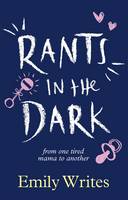
cv_Rants-in_the_dark

Hearing her speak today was just like reading her writing. Humour, honesty and absolute compassion for women and their families is what seems to drive Emily. Her opening story was an off-the-cuff description of going out the night before and drinking quite a bit of wine at dinner with Jesse Mulligan. Her self-deprecating style when sharing the shenanigans of the previous evening, and her, ahem, ‘womanly’ admiration of Mulligan had the audience pretty much crippled with laughter.
Later, and on a more serious note, Emily talked about the unreal pressures women (and women as mothers, in particular) are under, and how she hoped her writing helps address these things. She pointed out that the normalisation of taboo topics like prenatal and postnatal depression would be a really positive thing, and would mean fewer mothers were lost to families.

I think what is so attractive about Emily Writes is that she doesn’t know how amazing she is. She sees herself as a regular mum – a self-declared bogan – who is parenting children and who happens to also write. It’s this ‘normal’ vision of self that has perhaps made her so attractive to the general population in New Zealand; she’s one of us, but she’s also giving voice to us from the inside out, and it’s a voice that is usually silent. If you haven’t read her book Rants in the Dark, go out right now and get it. You’ll be so happy you did.

Attended and reviewed by Lara Liesbeth
Rants in the Dark
by Emily Writes
Published by Penguin Books NZ
ISBN 9780143770183


Dunedin Writers and Readers Festival 2017: Hannah Kent with Majella Cullinane

Wednesday, 5 April 2017

 Book Review: The March of the Foxgloves, by Karyn Hay
 
The March of the Foxgloves is a carefully crafted work set in the late 1800’s, mostly in New Zealand but also with some key scenes ‘back home’ in England, following protagonist Frances Woodward. We follow Frances’ footsteps as she escapes a restrictive and troubled existence for the chance to start afresh in the antipodes. Frances is a keen and technically savvy photographer – an enjoyable aspect of this text – and Hay has satisfyingly researched and written an authentic artistic voice with the internal dialogue and third person understandings of Frances’ art.

Karyn Hay has an excellent ear for dialogue. Her characters’ interactions are clear, crisp and believable. When main character Frances talks to the children of her hosts at Dunleary in Tauranga, Hay creates convincing and sometimes madly humorous conversations. She obviously has children of her own and one can assume that she has partaken in many such maddening back-and-forths. After taking a photograph, agreed on by both adult and child, one interaction goes like this:

cv_the_march_of_the_foxgloves“What shall we call it?”
“What shall we call what?”
“The photograph.”
“What photograph?”
“The photograph I’ve just taken.”
“Can I see it?” Tussie asked eagerly, running towards her.
This Monty Python-esque exchange between the Frances and Tussie suggests that maddening conversations with the young are not, at least in Hay’s mind, restricted to the 21st Century. In fact, the dialogue presented around the children is one of the most enjoyable aspects of Hay’s novel.

A lot of the book moves at slow pace. The plot seems incidental to the finely crafted characterisations and moments – almost vignettes – which are accurately and deliberately described. Minor character Wolf’s descent into the opium den (‘ … behind their eyelids all vision was purely chimerical.’) and Marshall Harding’s feelings for love-sick hostess Hope and his fiancee Callista (‘Her aperture was more compelling than a plate of mutton stew to a sailor.’) are well-crafted moments, but the rhythm of these anecdotes moves the story with unusual rhythm. By the end of the book, though, I hardly cared: the final sections make up in pace and structure for the slow build, as Frances becomes a true heroine and seemingly random moments are shown to be anything but trivial.

There is no doubt that Karyn Hay can write very well. I’m looking forward to seeing what she puts her finely-honed ear to next.

Reviewed by Lara Liesbeth
The March of the Foxgloves
by Karyn Hay
Published by Esom House Press
ISBN 9780473365820

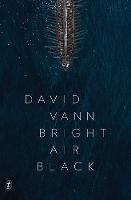
Book Review: Bright Air Black, by David Vann

"Her father a golden face in darkness … face of the sun, descendant of the sun. Betrayal and rage.” So begins David Vann’s Bright Air Black, a creative interpretation of classical Greek figure Medea and her life of extremes: betrayal, rage and the symbolic sun all feature strongly throughout.

cv_bright_air_black.jpgVann’s poetic title comes from Robin Robertson’s translation of Euripides’ Medea, which was actually written 800 years after Medea and Jason’s historic journey in the Argo: “When mortals hope, the gods frustrate./From our dull lives and loves they make/an unexpected passion play./They turn the bright air black …” For those familiar with the Euripidean classic, Vann notes that his own text is set 3,250 years ago ‘following the archaeological evidence and never straying from realism.’ This means that magic portrayed here is less ethereal and surreal: Medea’s servitude to Hecate and her intelligent sorcery around the betrayal of another King, Pelias, feels rooted in human behaviour and realism.

Medea is a rich imagining as a character; Vann writes her in a way that captures the complexity of the human condition and the dichotomies we all have and live with. At once brutal and sensual; loving and hating; gentle and rage-filled, Medea is both godlike and fundamentally human at her very core.

Vann has rich material to work with, but he also has a wicked imagination and uses this creativity to access dark places. The book opens with Medea slowly and deliberately tossing parts of her dismembered brother’s body overboard as Jason’s boat – the classically famous Argo – makes its way slowly away from Medea’s pursuing father and her homeland. This visceral treachery continues over 100 pages. The slow release of her sibling’s mortal flesh is vividly described – ‘Medea takes a piece of her brother, a thigh, heavy and tough, muscled, and licks blood from it, dark and thick.’ – until, finally, ‘she levers the spoon beneath while grabbing his shoulder with her other hand, peels him back finally, and is able to roll him overboard.’ Other gloriously vivid descriptions include: ‘misshapen lumps adhered to the wood’ and ‘a rotted heart liquified. The spoon emerging shiny with drool’. Medea’s murder of her brother is paid for by the reader in absorbing the length and constancy of these relentless descriptions.

Jason is portrayed here as a bit of a wimp, really. He lets Medea down several times throughout the book – betrayals – most obviously at the end, when she experiences total rejection. But perhaps she doesn’t think much of him either: ‘Young and muscled and false, not to be trusted, but he is beautiful and he is all she has.’ She, in turn, has betrayed her father, brother and homeland and thus has limited choices.

Vann uses sentence fragmentation consistently and with force throughout the text. Whilst at first this feels jarring, eventually it creates a rhythm that echoes the fragmented journey of the Argo and the doomed relationship between Medea and Jason. Coupled with first person narration, it also maneuvers the reader towards a state of claustrophobia; this is relentless and confrontational and really well done.

The end of the book is a fitting one. In utter chaos and climax, and with a mouthful of blood manifested in the most shocking of ways, Medea ‘lurches forward and sprays the air to turn it dark. Bright air black.’ And so it ends as it starts, a story cycle of death, despair and escape. Vann has written a doozy of an interpretation here, and one which challenges a reader’s perception of both right and wrong and concepts of good and evil. For, in the end, despite her murderous ways, Medea still feels like a heroine in this story. Just a really violent, complex one.

Reviewed by Lara Liesbeth

Bright Air Black
by David Vann
Published by Text Publishing
ISBN 9781925355208

Thursday, 9 February 2017

Students leave; you stay.  Except when you leave, too.


The earth is still turning and the stars still come out at night - but for a while it has felt like neither were happening.  And so after a lot of soul-searching, I've decided to take leave of (or leave) teaching.

I will not sound original at all when I say that teaching has drained me in a way I had not thought possible.  Perhaps it's also not original to say that it has also sustained me - but not quite to the same degree.  The cons have become a lot more obvious than the pros, so to speak. Over seven years, I have felt an incremental drain on my personal resources that I'm not willing to endure anymore (and endurance is indeed the right word). Fulltime teaching is a beast that I do not wish to ever ride again.

I want to teach, OH! How I want to! The students are on the 'pro' side; the enthusiasm, passion and thoughts of my students will be dearly and sincerely missed.  But I won't miss the tiredness, the lack of energy for my own daughter, the urge to lie on the couch all weekend (and all holidays, for that matter).  I won't miss the institutionalisation of education. It could be so good!  And yet it's not.

It's really heartening that there are some places that are starting to explore the creative possibilities of education in our time.  I've tried to document a few on this blog, and, throughout my career, I've tried to synthesise some of the ideas I thought were (and think are) really valid. But fulltime teaching of 130 students per year (and then another 130 students the following ... and then another the following ...) does not allow for the creative.  Conversations never really have a chance to develop a richness or a depth when you are busy relating to 130 plus of them. I suspect it can be attempted if you are parttime, and I hope, in the future, to have some sort of experience of that.  I am good at what I do.  I've won awards, had positive feedback. Students are upset that I'm leaving.  And me, too.  But it's a choice that's not really a choice anymore.

I'll miss the diversity group I've been teacher representative for.  But students leave, and you stay. It's an unusual model, watching yourself age each year as students all stay the same.  Year 9's are Year 9's every year.  And Year 13's leave at the end of each year. And you stay. 

So I'm choosing not to stay. I'm going to try and figure out a way that the art and creativity of teaching can endure without the feeling of endurance slowly eating at your humanity and energy.  I don't know how long it will take, but it's important enough to try.

Here's a photo essay of contemplation.  All of these places helped me in my journey towards making this brave decision.  I'm really sad, but I'm sort of happy, too.  And I think once I really leave, in two months, the happiness will be very real and very present.  Like these cows.


Sunday, 16 October 2016

Nga Manu Korero Finals in Whangarei


During the last week of Term 3, Ahi Kaitai-Mullane represented our school and region at the Manu Korero National Finals in Whangarei.  To get there, she had to win the Regional Nga Manu Korero competition in Invercargill.  Which she did.  Ahi was representing in the Senior English category, and asked me to attend in support.  I was honoured to do so.

We were also supporting students from Otago Boys' High School, Otago Girls' High School and Kings' High School, who were representing in Senior Maori, Junior English and Junior Maori respectively.

It was wonderful to have students and staff from all four schools come together and work as one.  Too often high schools tend to compete against each other for students.  This was a refreshing change.  If only it could be like this more often! Imagine what could be achieved with collaboration rather than competition.  Anyway, I digress ...

Ahi's prepared speech was very powerful.
You should also watch the support haka from our four schools.  I'm the petrified one hiding in the back behind our very capable students (we had 24 hours to learn it).


We also managed to visit the Treaty of Waitangi grounds, which was pretty special.  I had a real sense of our history there, and it was made extra special by the fact that all Otago schools were on the grounds at the same time practising their waiata.

We had to do the rollercoasters!


Auckland

Waiata at Waitangi

Our crew at Waitangi


Shae, Chelsea, Hope-Jane, Ahi and Emma represent Logan Park High School and Otakou/Murihiku

Otago schools unite

Whangarei palm trees

Practising

Matuas waiting

Waitangi treaty grounds


Where we stayed

More fantastic videos, including Ahi's impromptu speech, can be found here.

The New Zealand Spelling Bee (or 'Let's get Spellbound!')


Last year I won a teaching award through the New Zealand Spelling Bee organisation.  Janet Lucas has worked tirelessly for years to have this competition be the success it is, and last year's competition was the end of an era, so to speak.  Not that anyone knew it then.  Every year I ask students if they want to enter, and every year we have about 10 students sit the written tests, which get sent to Janet and marked.  We seem to have a strong tradition in spelling; in 2014, when I reinvigorated entries from Logan Park (it had fallen off the radar for a couple of years) we had three semi-finalists.  George Sebonadiere actually went on to win the national Spelling Bee after placing second in the regional semi-final.  You can read about George's wins here and here and here and here!


In 2015, we had three students go through to the regional semi-finals, but just missed out; the top two went through and one of our students came third.  This year, two students (repeat semi-finalists!) went through to the final stages.  But this year was different.

This year, the New Zealand Spelling Bee became 'Spellbound', a new TVNZ programme, complete with shiny lights, glitzy sets and Toni Street.  Wowzers!  What followed was two intensive days of 'welcome to television' and invaluable media lessons for the students.


Annie and Hugh, our finalists, were flown up to Auckland and then spent pretty much every waking hour of those two days at the Bruce Mason Theatre.  Hugh made the finals of the finals, but poor Annie had to wait around until 8pm (they arrived at 7am) to compete in here not-quite-final.


It was exhausting and different to what we had expected.  Hugh and Annie can both hold their heads up high.  They competed with grace and dignity and I was really proud to be able to support them up there.

There was a gorgeous sunset on the way home, too.


http://www.spellingbee.co.nz/

https://www.tvnz.co.nz/ondemand/spellbound